iPhone Duo Foldable Silicon Meets Siri
Apple unveiled the iPhone Duo, pairing a 7.6-inch foldable display and 2nm A20 Pro silicon with a rebuilt Siri AI engine powered by Google Gemini.
What is the iPhone Duo and why is it trending?
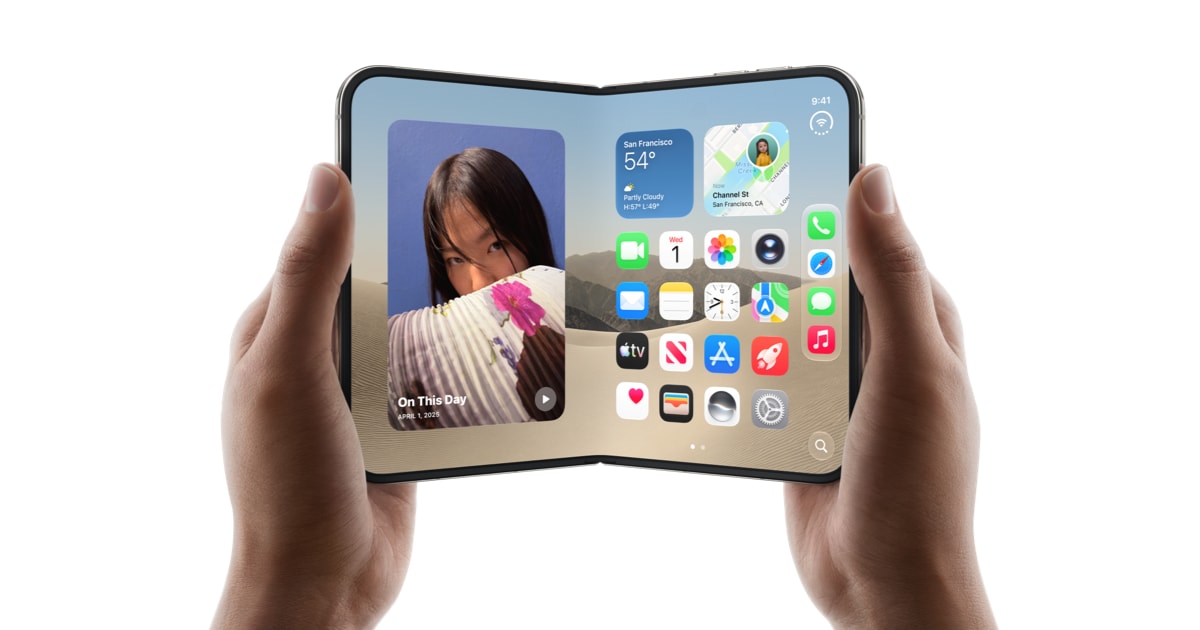
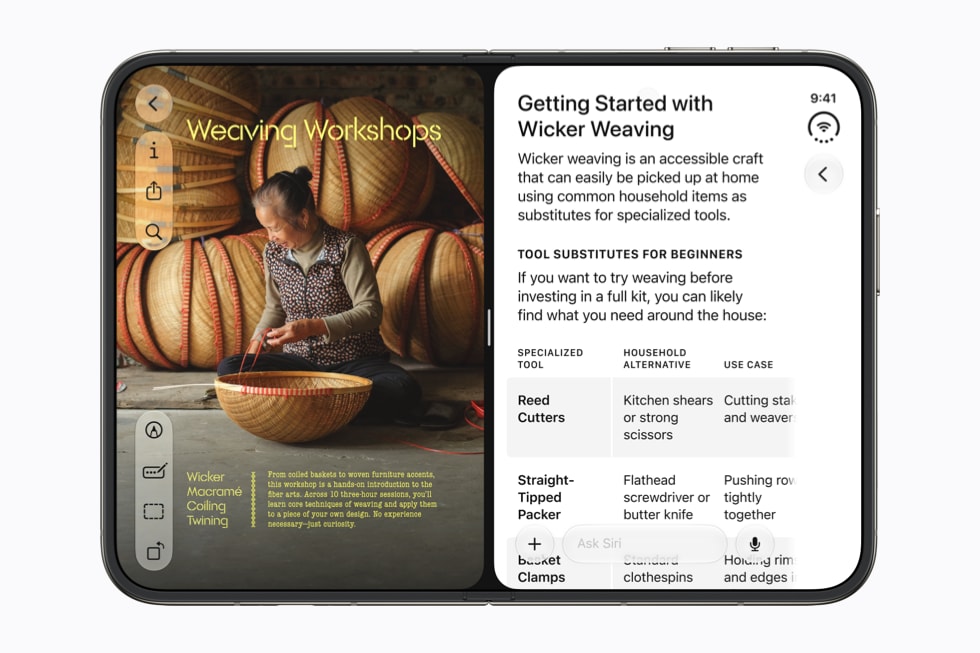
Apple unveiled the iPhone Duo on September 9, 2026, marking its long-anticipated entry into foldable hardware alongside the iPhone 18 Pro. The device combines a compact 5.4-inch outer cover screen with an expansive 7.6-inch inner workspace, powered by next-generation 2nm A20 Pro silicon and an entirely reconstructed Siri AI assistant.
The reason it is currently dominating search trends comes down to a collision of two major shifts. On the physical side, Apple finally solved its multi-year display crease problem, housing a foldable tablet into an everyday pocket profile. On the software side, Siri AI represents the biggest architectural overhaul to Apple's voice assistant since its inception. Instead of canned search snippets or rigid command trees, iOS 27.1 pairs Apple's on-device neural engine with Google Gemini cloud intelligence for multi-app execution and ambient screen comprehension.
At ZeroShot Studio, we spend most of our time evaluating edge compute and agent runtimes. When hardware changes, the constraints around how we run models change with it. In our earlier breakdown of the Raspberry Pi AI Camera, we saw how moving neural inference directly to sensor dies eliminates host bottlenecks. The iPhone Duo applies that exact philosophy to consumer mobile: pairing high-density thermal management with dedicated silicon so on-device models run continuously without scorching your palm or draining the cell in two hours.
How does the foldable display and titanium chassis perform?
The iPhone Duo uses a book-style inward fold engineered around a custom titanium hinge mechanism. When closed, the phone functions as a standard 5.4-inch smartphone that is easy to hold with one hand. When opened, the inner panel unfolds into a 7.6-inch canvas with a profile similar to an iPad Mini.
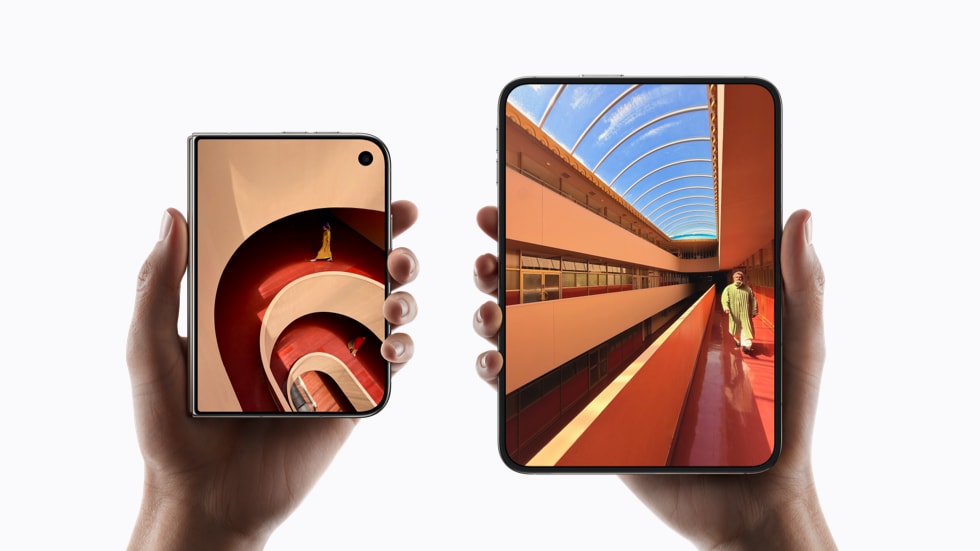
Both screens feature OLED ProMotion panels with adaptive refresh rates scaling dynamically between 1Hz and 120Hz. Crucially for fieldwork, outdoor peak brightness on both the interior and exterior panels reaches up to 3,000 nits, matching the brightest standalone displays on the market. Apple also engineered a consistent aspect ratio across both displays, meaning UI layouts and active applications do not suffer awkward reflow jumps when opening or closing the device.
To protect the folding mechanism, Apple reinforced the external cover display with Ceramic Shield 2 and used Ceramic Shield across the rear glass panels. The internal foldable display uses an ultra-thin flexible glass composite engineered to eliminate the center ridge crease that plagued early generations of competitor foldables. The entire assembly retains an IP68 rating for water and dust resistance, making it one of the few foldable designs on the market capable of handling actual rain and job-site grit without particulate failure.
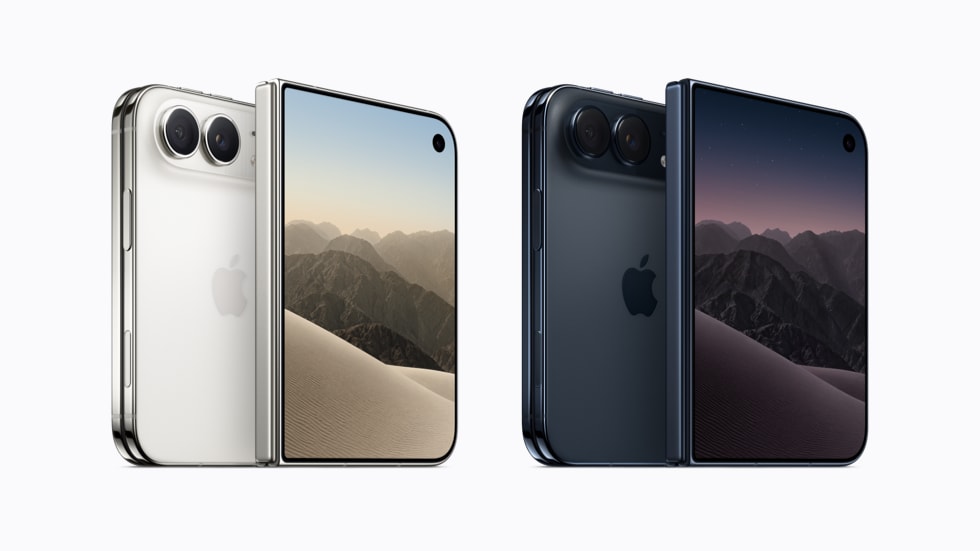
For input, the Duo is the first iPhone to add support for the Apple Pencil (USB-C), turning the 7.6-inch unfolded panel into an active digital notebook. It also integrates an under-screen camera embedded directly into the inner display matrix. This keeps FaceTime video calls and video feeds clean without cutting a permanent camera hole or notch into the main working surface.
What makes the 2nm A20 Pro silicon different?
Foldable form factors introduce brutal thermal constraints. By splitting battery cells and folding the chassis in half, internal volume shrinks while surface contact increases. To run sustained intelligence workloads without thermal throttling, Apple built the A20 Pro system-on-chip using TSMC's 2nm fabrication process, backed by an integrated copper vapor-chamber cooling assembly.
The 2nm node brings a decisive leap in transistor density and energy efficiency. The A20 Pro packs upgraded CPU performance cores, an efficient multi-core graphics engine, and a specialized 16-core Neural Engine designed explicitly for low-bit tensor mathematics. This architecture allows the device to process on-device models at high throughput while consuming up to 35 percent less power during continuous inference compared to earlier generation chips.
flowchart TD
    UI[Active Screen State: 5.4-inch Cover or 7.6-inch Canvas] --> Perception[On-Screen Awareness Parser]
    Perception --> Dispatcher{Execution Dispatcher}
    Dispatcher -->|Local Semantic Action| NPU[2nm A20 Pro Neural Engine]
    Dispatcher -->|Complex Synthesis / Cloud Reasoning| PCC[Private Cloud Compute + Gemini]
    NPU --> Intents[App Intents Orchestrator]
    PCC --> Intents
    Intents --> Target[Multi-App Execution: Calendar, Mail, Files, Terminal]
Connectivity also received an in-house upgrade. The Duo incorporates Apple's proprietary C2 cellular modem, replacing external basebands to lower standby power draw. It is paired with Apple's N1 wireless networking chip, which delivers native support for Wi-Fi 7, Bluetooth 6, and Thread protocol connectivity for smart home control.
The power subsystem uses a split dual-battery layout distributed across both halves of the titanium chassis. Apple rates the combined system for up to 24 hours of mixed-use battery life across both panels. When plugged into a compatible high-wattage fast charger, the dual cells reach a 50 percent charge in approximately 20 minutes, preventing long downtimes during mobile production days.
How does rebuilt Siri AI orchestrate tasks across applications?
The standout software feature of the iPhone Duo is Siri AI on iOS 27.1. For years, voice assistants were essentially voice-triggered search engines with rigid syntax rules. If you phrased a command slightly off-script, the entire query collapsed.
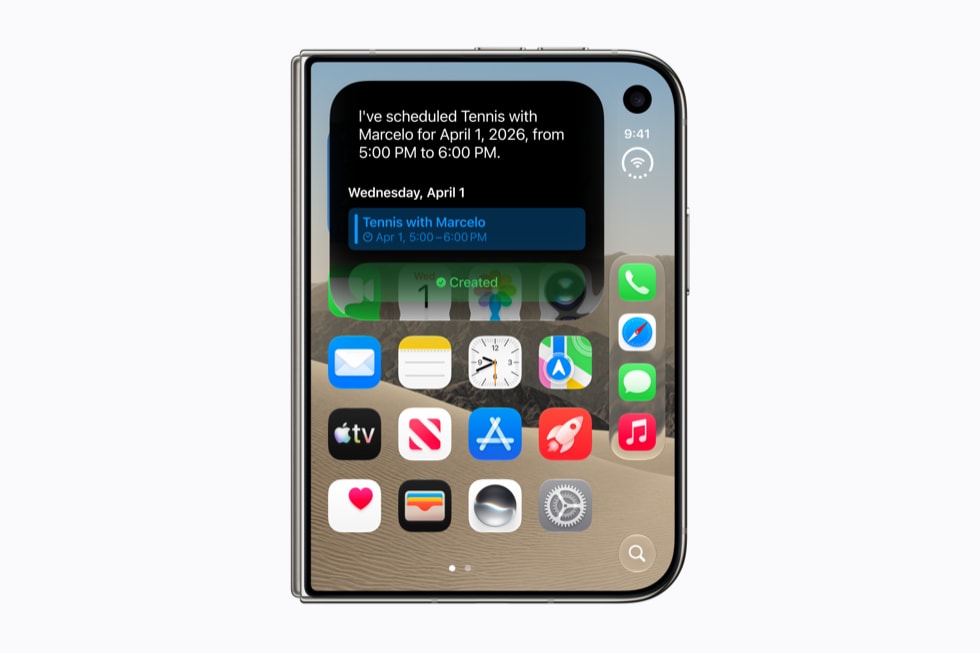
Siri AI breaks that pattern by integrating three distinct architectural capabilities:
- On-screen awareness: The assistant continuously parses the visual accessibility tree and active view state of your screen. If you are looking at a PDF spec sheet, an incoming message with flight details, or a code diff on the 7.6-inch inner display, you can simply say "send this tracking number to Sarah" or "create calendar events for these deadlines." Siri AI resolves the entity references directly from the active screen buffer.
- Multi-app task orchestration: Leveraging Apple's expanded App Intents framework, Siri AI can chain actions across multiple apps in a single step. It can pull a photo from an album, crop it according to text instructions, insert it into a draft note, and send an update via a project management client without requiring manual app-switching.
- Contextual personalization: The local index references historical messages, calendar bookings, notes, and photos to understand ambiguous requests. If you ask "what time is Jimmy arriving on Friday?", it cross-references recent email confirmations and shared messages to give a concrete answer.
The iPhone Duo supports the Advanced Model tier of Siri AI. While older devices run a basic model, devices with an A19 Pro or A20 Pro chip feature upgraded local weights with expressive speech synthesis, real-time dictation correction, and completely offline on-device processing for personal data requests.
What are the real hardware trade-offs and regulatory catches?
No first-generation hardware revision arrives without trade-offs, and the iPhone Duo is no exception. Builders considering the device as a mobile development terminal need to weigh several practical hurdles:
First, the price and depreciation curve. Analysts at SellCell estimated that first-generation luxury foldables can lose over $1,200 of their market value within the first 12 months due to mechanical hinge wear concerns and rapid silicon iterations. Starting at a high premium tier, this is an expensive machine to drop on a concrete workshop floor.
Second, Apple Pencil integration is delayed. While the hardware digitizer supports the Apple Pencil (USB-C), Apple noted that full stylus support will not be enabled at initial launch, arriving in a later software update. If your primary goal was taking immediate handwritten notes on the 7.6-inch canvas, you will have to wait for the firmware patch.
Third, regional regulatory limitations. Siri AI will not be available in the European Union at launch. Apple stated that complying with the Digital Markets Act (DMA), which requires granting third-party AI systems equivalent system-level integration, cannot yet be accomplished without compromising core privacy boundaries. Additionally, Siri AI features are pending regulatory review in mainland China, meaning international operators will face fragmented software feature sets depending on their region.
Hardware breakdown: How does the Duo compare to conventional flagships?
To see how the hardware package balances against Apple's standard Pro lineup, here is how the core specifications align:
| Hardware Subsystem | iPhone Duo (Foldable) | iPhone 18 Pro | Previous Generation Baseline |
|---|---|---|---|
| Form Factor | Book-style foldable | Rigid slate | Rigid slate |
| Cover Display | 5.4-inch OLED (120Hz ProMotion) | N/A | 6.1-inch OLED (120Hz) |
| Inner Main Display | 7.6-inch OLED (120Hz, 3,000 nits) | 6.3-inch OLED (3,000 nits) | 6.1-inch OLED (2,000 nits) |
| SoC Fabrication | Apple A20 Pro (TSMC 2nm) | Apple A20 Pro (TSMC 2nm) | Apple A18 Pro (TSMC 3nm) |
| Thermal System | Integrated vapor-chamber cooling | Graphite sheet assembly | Internal graphite pads |
| Cellular Modem | In-house Apple C2 modem | In-house Apple C2 modem | Third-party 5G modem |
| Stylus Input | Apple Pencil (USB-C) supported | Not supported | Not supported |
| Inner Camera | Under-screen camera (FaceTime 4K) | Standard Dynamic Island cutout | Standard Dynamic Island cutout |
| Battery Life | Up to 24 hours mixed use | Up to 27 hours video | Up to 23 hours video |
| Siri AI Capability | Advanced on-device model tier | Advanced on-device model tier | Basic / Cloud-assisted tier |
The engineering compromises are clear. You trade three hours of peak single-panel battery life and pay a significant price premium in exchange for a pocketable 7.6-inch workspace and next-generation agent orchestration.
For developers and technical builders, the iPhone Duo is more than a luxury gadget. It represents the first mainstream mobile device designed from the silicon up to host ambient, screen-aware AI agents without melting down its battery. We will be tracking real-world developer workflows and App Intent performance as soon as units land on October 23, 2026.
FAQ
When is the iPhone Duo available for pre-order and release? Apple announced the iPhone Duo on September 9, 2026. Pre-orders begin on October 16, 2026, with retail shipments and in-store availability launching on October 23 across approximately 70 countries and regions.
What is the difference between Siri AI and standard Siri? Siri AI is a ground-up reconstruction of Apple's assistant on iOS 27. It integrates Google Gemini for deep world knowledge and reasoning, paired with Apple's 2nm A20 Pro Neural Engine for on-device screen awareness, semantic memory, and multi-app tool execution via App Intents.
Does the iPhone Duo crease show on the inner display? Apple uses an ultra-thin flexible glass composite and a titanium multi-gear hinge engineered to distribute tension across a wider radius, minimizing the visible center crease compared to earlier competitor folding displays.
Why is Siri AI delayed in the European Union? Apple delayed Siri AI in the EU due to regulatory requirements under the Digital Markets Act (DMA). Apple stated that opening deep system-level APIs to third-party assistants would compromise user data privacy and security architectures.