Our newest AI Quest: Mapping the human brain
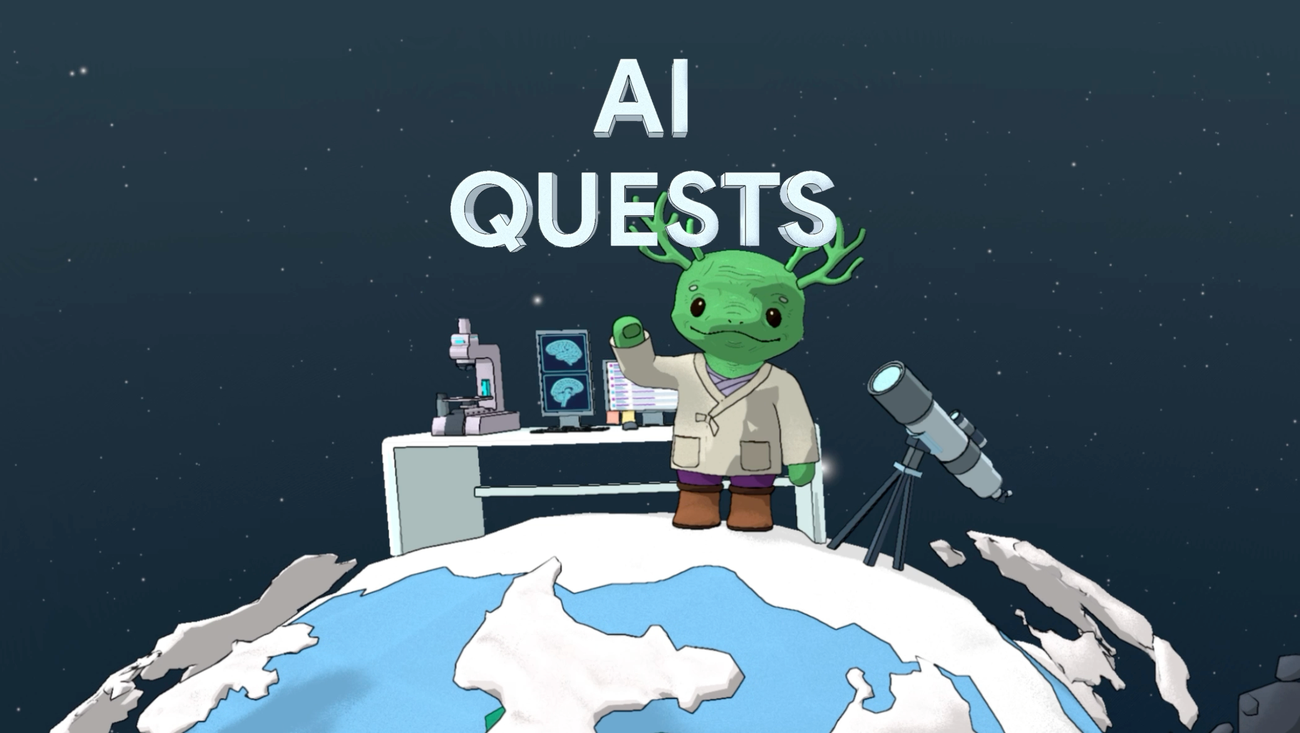
Our third lesson in our AI Quests series, “Polar Peaks,” teaches students key AI literacy skills while delving into neuroscience.
What was announced
Google AI Blog released an official announcement regarding Our newest AI Quest: Mapping the human brain on November 06, 2026.
Our third lesson in our AI Quests series, “Polar Peaks,” teaches students key AI literacy skills while delving into neuroscience. Senior Director, Google Research Google Research and the Stanford Accelerator for Learning just launched "Polar Peaks," an interactive quest that teaches students ages 11 to 14 how to map the human brain using...
Key technical developments and highlights detailed in the release include:
- Explore other styles:: Today, we’re launching “Polar Peaks”, our third quest in the AI Quests series, created by Google Research and the Stanford Accelerator for Learning to teach students how AI works and how to use it responsibly. AI Quests invites students ages 11 to 14 to step into the shoes of...
- Polar Peaks: A journey to map the human brain: In the first two quests, students tackle flood forecasting and eye disease detection, inspired by Google Research’s Flood Forecasting initiative and AI model for diabetic retinopathy screening. Our newest quest, “Polar Peaks,” has students travel to the frontiers of...
- Training modules: Tools for teaching AI literacy: Teachers play a critical role in bringing the quests to life and fitting them into their existing classroom curriculum. We’re rolling out new dedicated teacher training modules to help educators reinforce key AI literacy concepts and use AI Quests for learning and discussion....
Why this matters for technical teams
Updates across foundation models and developer ecosystems directly affect platform baselines, integration ergonomics, and operational trade-offs.
- Developer ergonomics & scaffolding: New features alter baseline expectations and test whether custom agent glue code can be simplified.
- Operational trade-offs: New product interfaces and feature additions test whether native provider tooling solves user friction or merely wraps existing model capabilities in proprietary interfaces.
- Evaluation priorities: Teams should assess whether adopting this feature simplifies their user experience or adds vendor lock-in compared to composable alternatives.
Source documentation and primary references: Google AI Blog.
ZeroLabs Take
The line between genuine productivity enhancements and superficial wrappers has never been thinner. In evaluating Google AI Blog's announcement of Our newest AI Quest: Mapping the human brain, we look for concrete developer utility. When a platform introduces capabilities that eliminate repetitive friction or provide seamless multimodal context, that adds real daily value. However, when updates simply rebrand basic prompt wrappers as groundbreaking features, builders should stay skeptical. Focus on whether this functionality meaningfully accelerates your workflow or introduces unnecessary proprietary lock-in.
What ZeroLabs is watching next
- API availability: Monitoring whether these interface capabilities become accessible via developer APIs for programmatic automation.
- Workflow retention: Tracking community feedback on whether users continue using these features past initial experimentation.
- Open-source alternatives: Observing how quickly community extensions reproduce similar capabilities without closed ecosystem dependencies.
FAQ
- What was officially announced?
Google AI Blog published details on Our newest AI Quest: Mapping the human brain, focusing on product capabilities and workflow integration.
- How does this affect existing developers and users?
Teams should assess whether adopting this feature simplifies their user experience or adds vendor lock-in compared to composable alternatives.
- Where can I access the complete release details?
The full announcement and documentation are available directly from Google AI Blog.