Making global data easier to explore
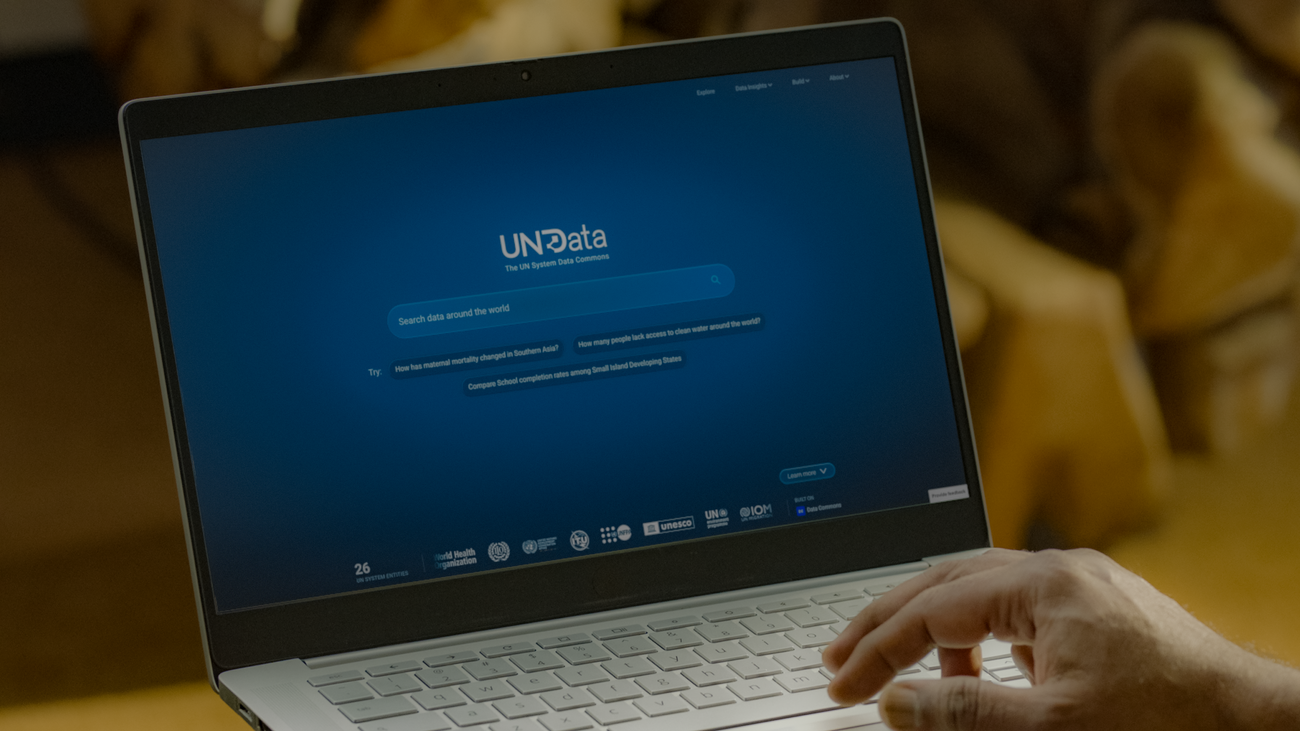
UN System Data Commons is an open, AI-ready platform integrating critical global statistics into a single searchable resource.
What was announced
Google AI Blog released an official announcement regarding Making global data easier to explore on September 18, 2026.
UN System Data Commons is an open, AI-ready platform integrating critical global statistics into a single searchable resource. Every year, entities across the United Nations system compile data to track challenges that affect how we work, learn, stay healthy, and care for our loved ones. These agencies work with some of the highest-integrity...
Key technical developments and highlights detailed in the release include:
- Connected data for complex global efforts: Many of society’s greatest challenges - from public health to poverty eradication - cannot be solved with a single data source. Effectively tackling these crises requires understanding how different datasets intersect. The UN System Data Commons helps uncover these...
- Natural language features for easier exploring: The UN System Data Commons uses AI to democratize access to these insights, letting people explore through intuitive, natural-language search. This means anyone, from a nonprofit program manager to a journalist to an international policy analyst, can ask questions in plain...
- Putting AI to work as agentic research assistants: Today’s launch also brings AI assistant capabilities directly to the research workflow. Instead of spending hours manually searching for numbers and assembling spreadsheets, you can prompt an AI assistant to do the heavy lifting. Built on open standards like the Model Context...
- More data and new features to come: Over the coming year, the UN system will continue adding datasets from more UN entities, with a goal of including 80% of UN system statistical datasets by 2027. Explore the data yourself at data.un.org . Check your inbox to confirm your subscription.
Why this matters for technical teams
Updates across foundation models and developer ecosystems directly affect platform baselines, integration ergonomics, and operational trade-offs.
- Developer ergonomics & scaffolding: New features alter baseline expectations and test whether custom agent glue code can be simplified.
- Operational trade-offs: New product interfaces and feature additions test whether native provider tooling solves user friction or merely wraps existing model capabilities in proprietary interfaces.
- Evaluation priorities: Teams should assess whether adopting this feature simplifies their user experience or adds vendor lock-in compared to composable alternatives.
Source documentation and primary references: Google AI Blog.
ZeroLabs Take
The line between genuine productivity enhancements and superficial wrappers has never been thinner. In evaluating Google AI Blog's announcement of Making global data easier to explore, we look for concrete developer utility. When a platform introduces capabilities that eliminate repetitive friction or provide seamless multimodal context, that adds real daily value. However, when updates simply rebrand basic prompt wrappers as groundbreaking features, builders should stay skeptical. Focus on whether this functionality meaningfully accelerates your workflow or introduces unnecessary proprietary lock-in.
What ZeroLabs is watching next
- API availability: Monitoring whether these interface capabilities become accessible via developer APIs for programmatic automation.
- Workflow retention: Tracking community feedback on whether users continue using these features past initial experimentation.
- Open-source alternatives: Observing how quickly community extensions reproduce similar capabilities without closed ecosystem dependencies.
FAQ
- What was officially announced?
Google AI Blog published details on Making global data easier to explore, focusing on product capabilities and workflow integration.
- How does this affect existing developers and users?
Teams should assess whether adopting this feature simplifies their user experience or adds vendor lock-in compared to composable alternatives.
- Where can I access the complete release details?
The full announcement and documentation are available directly from Google AI Blog.