You can now generate, preview, and edit documents, PDFs, presentations, spreadsheets, and more directly in Gemini.
We’re introducing new ways to create and refine documents, PDFs, presentations, spreadsheets, code, and more in the Gemini app.
What was announced
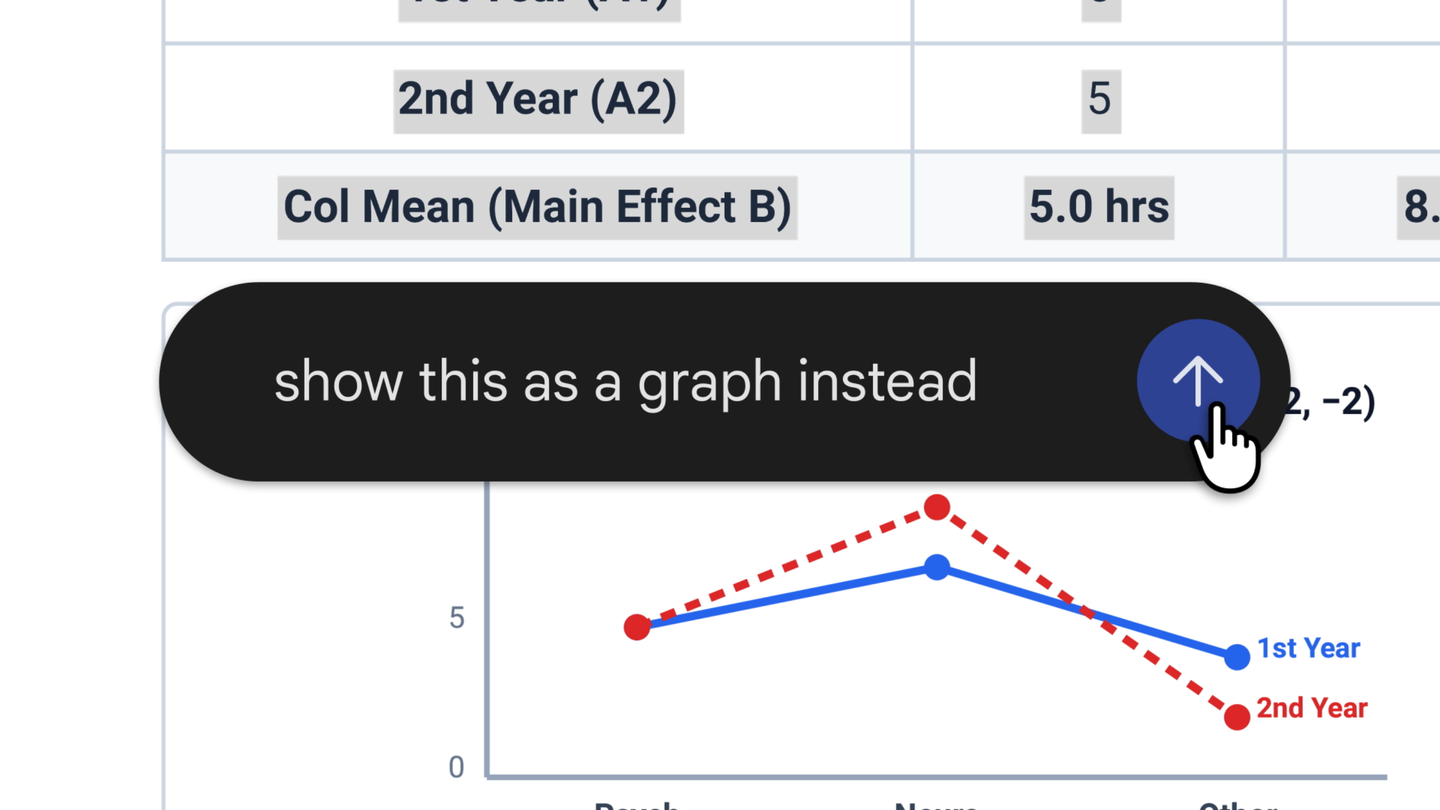
Google Gemini Blog released an official announcement regarding You can now generate, preview, and edit documents, PDFs, presentations, spreadsheets, and more directly in Gemini. on November 01, 2026.
We’re introducing new ways to create and refine documents, PDFs, presentations, spreadsheets, code, and more in the Gemini app. You can now generate, preview, and edit files right within your chat - expand to full screen to type edits directly, highlight text to ask questions, or have Gemini refine your files. PDF preview and editing is...
Key technical developments and highlights detailed in the release include:
- You can now generate, preview, and edit documents, PDFs, presentations, spreadsheets, and more directly in Gemini.: We’re introducing new ways to create and refine documents, PDFs, presentations, spreadsheets, code, and more in the Gemini app. You can now generate, preview, and edit files right within your chat - expand to full screen to type edits directly, highlight text to ask...
Why this matters for technical teams
Updates across foundation models and developer ecosystems directly affect platform baselines, integration ergonomics, and operational trade-offs.
- Developer ergonomics & scaffolding: New features alter baseline expectations and test whether custom agent glue code can be simplified.
- Operational trade-offs: Upgrades to foundation models redefine reasoning ceilings, token latency, and autonomous tool calling reliability across agent architectures.
- Evaluation priorities: Builders should benchmark this release against their domain-specific evaluation harnesses to measure real-world task accuracy and latency.
Source documentation and primary references: Google Gemini Blog.
ZeroLabs Take
Real architectural progress matters far more than synthetic benchmark vanity scores. While Google Gemini Blog's release notes for You can now generate, preview, and edit documents, PDFs, presentations, spreadsheets, and more directly in Gemini. showcase impressive capability figures, builders care about three concrete realities: function-calling determinism, end-to-end token latency, and predictable operational cost. If the updates documented in this release deliver verifiable improvements in multi-step task execution without degrading instruction following, it represents genuine engineering value. We welcome capability jumps that reduce brittle agent glue code, but recommend evaluating them on your own task distributions before refactoring production systems.
What ZeroLabs is watching next
- Community stress tests: Tracking independent evaluations of instruction following, needle-in-a-haystack retrieval, and complex coding harnesses.
- Tool-calling determinism: Measuring structured output schema compliance under load across complex agent swarms.
- Frontier competition: Watching how Anthropic, Google, and OpenAI adjust their matching latency and pricing tiers in response.
FAQ
- What was officially announced?
Google Gemini Blog published details on You can now generate, preview, and edit documents, PDFs, presentations, spreadsheets, and more directly in Gemini., focusing on frontier model architecture and developer capabilities.
- How does this affect existing developers and users?
Builders should benchmark this release against their domain-specific evaluation harnesses to measure real-world task accuracy and latency.
- Where can I access the complete release details?
The full announcement and documentation are available directly from Google Gemini Blog.