Southeast Asia’s digital economy to hit $368
Generative AI is now an essential part of daily life for 243 million Southeast Asians. Learn implementation patterns and deployment details at ZeroLabs.
What was announced
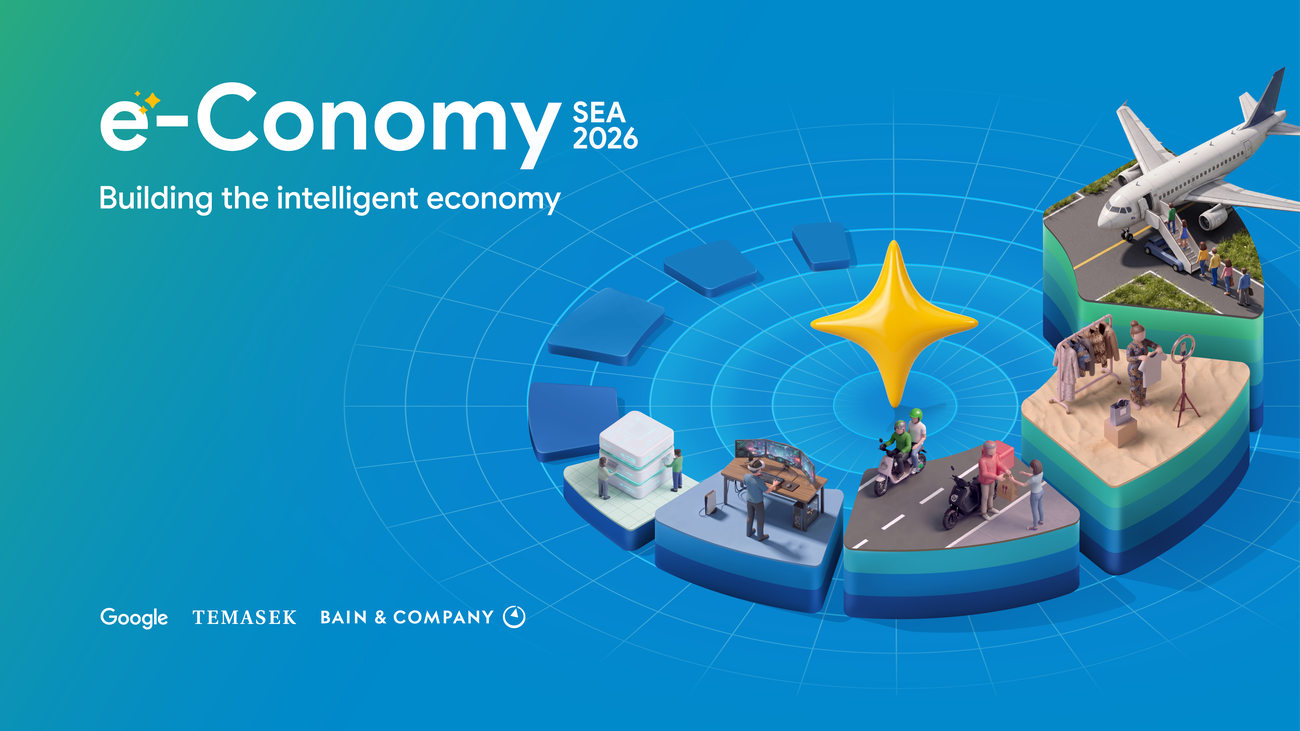
Google AI Blog released an official announcement regarding Southeast Asia’s digital economy to hit $368 on October 21, 2026.
Generative AI is now an essential part of daily life for 243 million Southeast Asians. Read about how this will impact the region’s economy in our 11th e-Conomy SEA report. Managing Director, Southeast Asia and South Asia Frontier Markets Southeast Asia’s digital economy is surging, with generative AI driving growth toward a projected $1...
Key technical developments and highlights detailed in the release include:
- Explore other styles:: In Southeast Asia, generative AI has become an essential part of daily life, actively used by 243 million people (58% of the working population) and scaling four times faster than the rollout of the mobile internet. This has major implications for the region’s economy,...
- AI is sustaining growth in every sector.: Across the digital economy, AI is reshaping how people live, shop, and move. E-commerce ($226B GMV, +18% YoY) anchors this shift, as shoppers use multimodal discovery and in-app assistants to confidently navigate complex purchases. These personalized experiences organically...
- Consumer trust will help unlock the era of agentic commerce.: Digital automation is already well established across the region, where 72% of users rely on everyday features like price tracking. This familiarity is clearing the runway for agentic commerce, with 75% expressing willingness to let AI agents autonomously compare prices and...
- Four major areas must adapt to enable AI adoption.: To support a projected 60-fold increase in regional AI usage by 2030, the region's broader digital ecosystem must systematically evolve across four critical conditions: Accelerated agentic adoption and sustainable economics: Businesses need to move beyond using AI to answer...
Why this matters for technical teams
Updates across foundation models and developer ecosystems directly affect platform baselines, integration ergonomics, and operational trade-offs.
- Developer ergonomics & scaffolding: New features alter baseline expectations and test whether custom agent glue code can be simplified.
- Operational trade-offs: New product interfaces and feature additions test whether native provider tooling solves user friction or merely wraps existing model capabilities in proprietary interfaces.
- Evaluation priorities: Teams should assess whether adopting this feature simplifies their user experience or adds vendor lock-in compared to composable alternatives.
Source documentation and primary references: Google AI Blog.
ZeroLabs Take
The line between genuine productivity enhancements and superficial wrappers has never been thinner. In evaluating Google AI Blog's announcement of Southeast Asia’s digital economy to hit $368, we look for concrete developer utility. When a platform introduces capabilities that eliminate repetitive friction or provide seamless multimodal context, that adds real daily value. However, when updates simply rebrand basic prompt wrappers as groundbreaking features, builders should stay skeptical. Focus on whether this functionality meaningfully accelerates your workflow or introduces unnecessary proprietary lock-in.
What ZeroLabs is watching next
- API availability: Monitoring whether these interface capabilities become accessible via developer APIs for programmatic automation.
- Workflow retention: Tracking community feedback on whether users continue using these features past initial experimentation.
- Open-source alternatives: Observing how quickly community extensions reproduce similar capabilities without closed ecosystem dependencies.
FAQ
- What was officially announced?
Google AI Blog published details on Southeast Asia’s digital economy to hit $368, focusing on product capabilities and workflow integration.
- How does this affect existing developers and users?
Teams should assess whether adopting this feature simplifies their user experience or adds vendor lock-in compared to composable alternatives.
- Where can I access the complete release details?
The full announcement and documentation are available directly from Google AI Blog.