Co-creating the future of fashion with Google
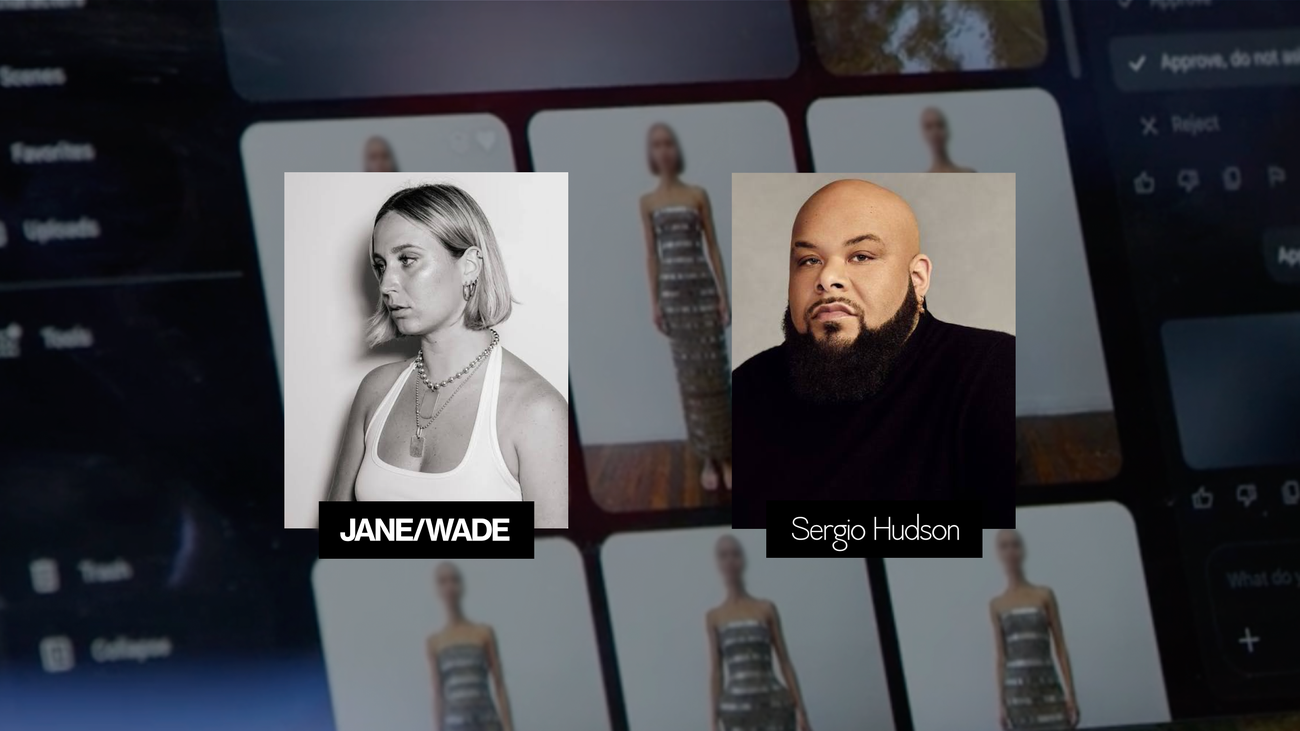
Two fashion designers created custom tools in Google Flow to help with set design and styling for New York Fashion Week.
What was announced
Google AI Blog released an official announcement regarding Co-creating the future of fashion with Google on September 18, 2026.
Two fashion designers created custom tools in Google Flow to help with set design and styling for New York Fashion Week. UX Designer, Envisioning Studio Google’s Envisioning Studio partnered with designers Jane Wade and Sergio Hudson to streamline fashion production using Google Flow. These AI tools helped Jane virtually style runway looks and...
Key technical developments and highlights detailed in the release include:
- Explore other styles:: Ask an independent fashion designer how they actually spend their time, and "designing clothes" is rarely the answer. Administrative tasks, factory logistics, and vendor coordination take up the bulk of their days, leaving very little time for design. Ahead of New York...
- Virtually styling a collection: The Google Flow tool we co-created with Jane, Styling Suite, mapped every facet of her runway model looks. In-person casting and fittings typically consume up to three full days for a design team. The tool allowed her to curate hair, makeup, accessories, shoes, and garments...
- Grounding runway design in a real budget: Sergio’s main challenge was staging his show without breaking his budget. In the past, asking his production crew to change lighting and props added to the overall costs, since a new 3D rendering was needed for every design revision. Our co-developed Google Flow tool, Runway...
- Moving fashion AI out of pilot mode: The results of these collaborations were visible on the runways at New York Fashion Week - and there’s room for more innovation. While there’s plenty of excitement around AI in the fashion industry, many projects remain stuck in theoretical testing. AI can make the production...
Why this matters for technical teams
Updates across foundation models and developer ecosystems directly affect platform baselines, integration ergonomics, and operational trade-offs.
- Developer ergonomics & scaffolding: New features alter baseline expectations and test whether custom agent glue code can be simplified.
- Operational trade-offs: New product interfaces and feature additions test whether native provider tooling solves user friction or merely wraps existing model capabilities in proprietary interfaces.
- Evaluation priorities: Teams should assess whether adopting this feature simplifies their user experience or adds vendor lock-in compared to composable alternatives.
Source documentation and primary references: Google AI Blog.
ZeroLabs Take
The line between genuine productivity enhancements and superficial wrappers has never been thinner. In evaluating Google AI Blog's announcement of Co-creating the future of fashion with Google, we look for concrete developer utility. When a platform introduces capabilities that eliminate repetitive friction or provide seamless multimodal context, that adds real daily value. However, when updates simply rebrand basic prompt wrappers as groundbreaking features, builders should stay skeptical. Focus on whether this functionality meaningfully accelerates your workflow or introduces unnecessary proprietary lock-in.
What ZeroLabs is watching next
- API availability: Monitoring whether these interface capabilities become accessible via developer APIs for programmatic automation.
- Workflow retention: Tracking community feedback on whether users continue using these features past initial experimentation.
- Open-source alternatives: Observing how quickly community extensions reproduce similar capabilities without closed ecosystem dependencies.
FAQ
- What was officially announced?
Google AI Blog published details on Co-creating the future of fashion with Google, focusing on product capabilities and workflow integration.
- How does this affect existing developers and users?
Teams should assess whether adopting this feature simplifies their user experience or adds vendor lock-in compared to composable alternatives.
- Where can I access the complete release details?
The full announcement and documentation are available directly from Google AI Blog.